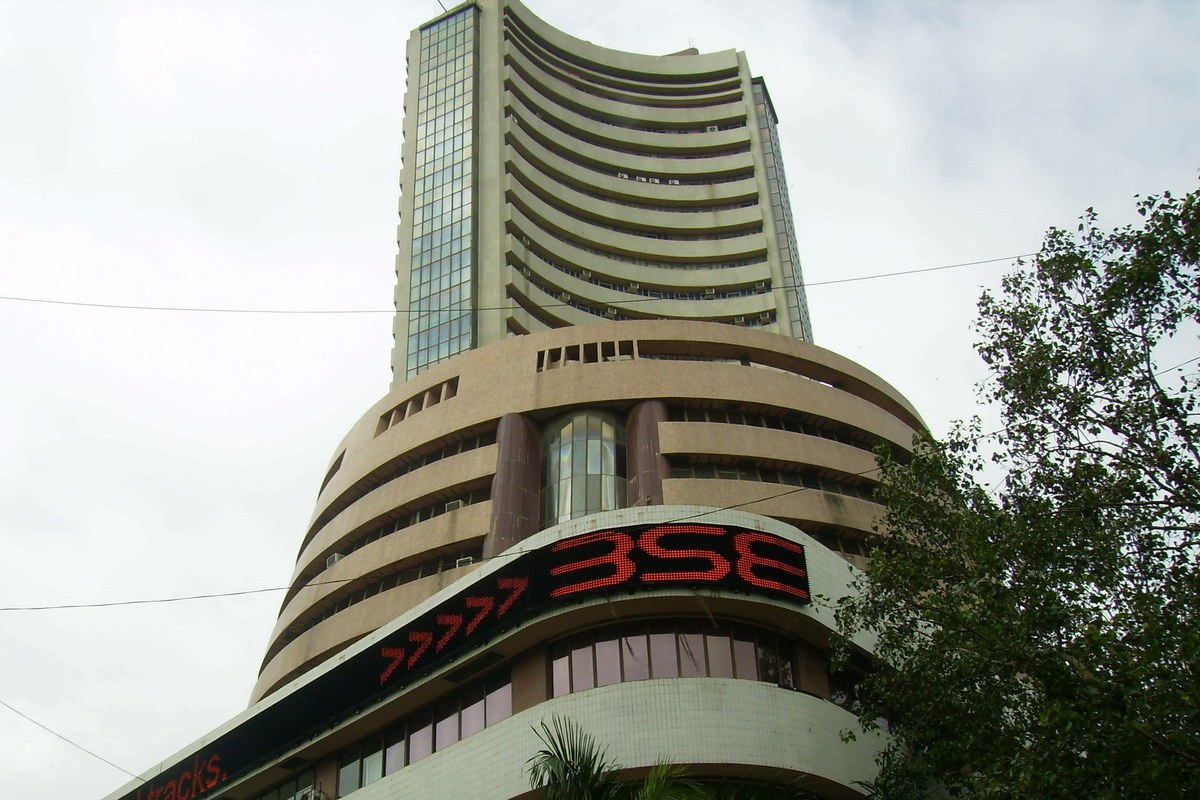
What happened? The BSE Sensex closed 1,483.72 points, or 1.77 per cent, lower at 82,435.99 on Monday (23 November), and the NSE Nifty 50 fell 450.95 points, or 1.75 per cent, to 25,349.65. Business Standard reported it was the sharpest fall since 8 July. The market value of BSE-listed companies shrank by about ₹5.2 trillion (₹5.2 lakh crore). On the BSE, 2,872 stocks declined and 1,601 advanced.
Why did banks pull the market down? Moneycontrol reported that markets opened higher but sold off, with banks, private lenders and state-owned banks, which had risen 18 to 22.5 per cent over the past four weeks, dropping between 2.4 and 3.3 per cent. The Nifty Bank index fell 3.17 per cent to 62,585.35. HDFC Bank and ICICI Bank lost 3.3 per cent each, and Reliance Industries 1.9 per cent. Banks accounted for 32 per cent of the total market-value erosion on the NSE, Business Standard said.
What is profit booking? It means investors sell shares that have gone up to lock in their gains, which can pull prices down even when nothing is wrong with the companies. “The correction reflects profit-booking after a four-week rally, amplified by Wall Street’s technology-led selloff and weakness across Asian markets,” said Vikram Kasat of PL Capital, as quoted by Business Standard.
What did global markets have to do with it? Moneycontrol, citing Reuters, reported that Wall Street’s technology stocks were hit hard on Friday, with the S&P 500 entering a technical correction and the Nasdaq 100 having its worst week since March 2020. South Korea’s Kospi fell by as much as 5.5 per cent on Monday, and shares in mainland China and Hong Kong dropped more than 1 per cent. Indian IT stocks bucked the trend: the Nifty IT index rose 1.69 per cent, Business Standard reported.
Why did metal stocks fall so sharply? The Nifty Metal index dropped 3.68 per cent after Tata Steel’s board approved selling its tubes and colour-coated steel businesses to APL Apollo Tubes and buying APL Apollo’s 26.6 per cent promoter stake, in transactions worth about ₹28,000 crore combined. Tata Steel shares fell 8.43 per cent to ₹163, the worst performance on the Nifty. APL Apollo plunged 21.29 per cent to ₹1,670, below the reported ₹2,100 a share for the promoters’ stake, Business Standard said.
Is this a crash, and what next? The Nifty 50 is now 3.9 per cent below its 52-week high. Foreign portfolio investors bought a net ₹5,672.99 crore of shares on Monday while domestic institutions sold a net ₹2,760.12 crore, according to provisional exchange data cited by Business Standard. Analysts quoted by the paper called such a pullback normal after a sharp rally and said the 25,300 to 25,500 range would be a key support zone for the Nifty. Motilal Oswal’s Siddhartha Khemka expected the market to consolidate in a week shortened by holidays in India and the US. This is not investment advice.
More to read




Behind the story
Read the sources and explore the context for yourself.