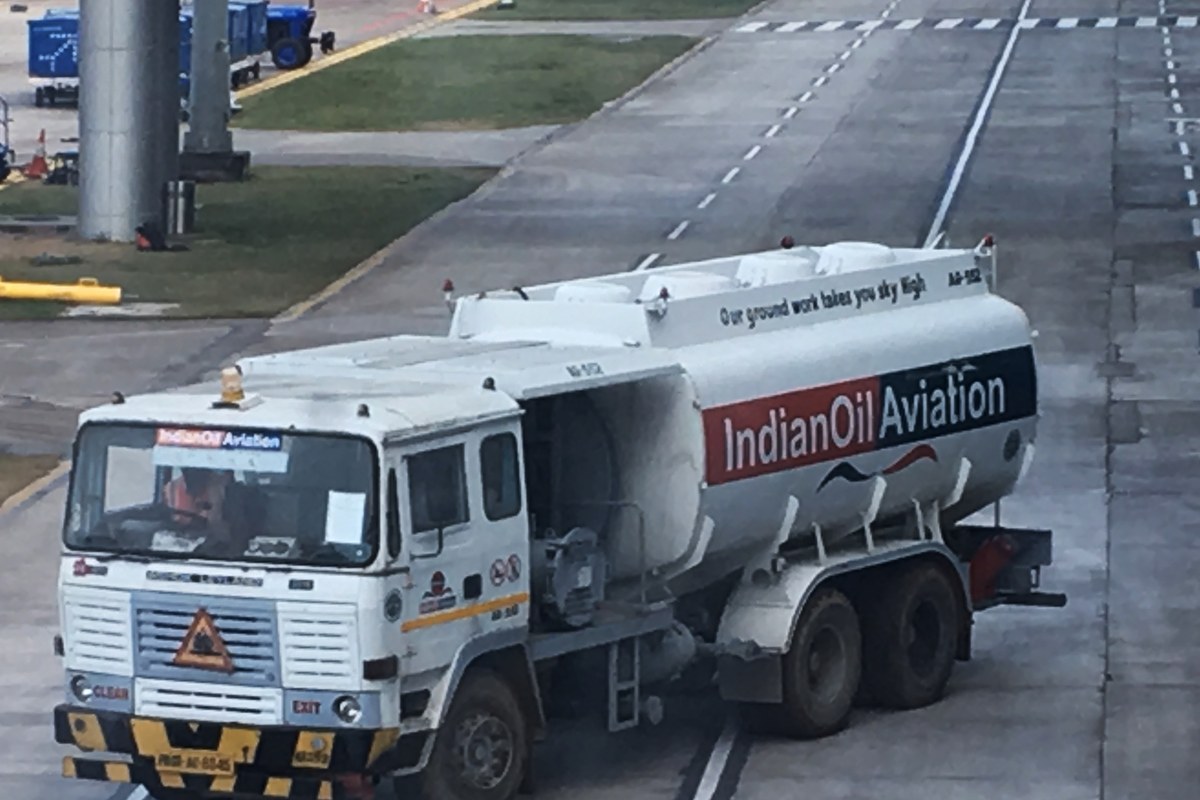
Indian Oil Corporation (IOC) has received government approvals to supply sustainable aviation fuel (SAF) commercially from its Panipat refinery in Haryana, chairman A.S. Sahney said on Tuesday (17 November). He said the plant can make enough fuel to meet India’s 1% blending target for international flights in 2027. Here is what that means.
What is sustainable aviation fuel? It is a biofuel with chemistry similar to ordinary jet fuel, which comes from crude oil, so existing aircraft engines can use a blend of the two, The Indian Express reported. It can be made from non-petroleum sources such as used cooking oil and agricultural waste, The Hindu reported. Airbus says its aircraft can fly on a blend of up to 50% SAF, according to The Indian Express.
What has IOC actually done? The Panipat unit uses used cooking oil as its raw material. It produced its first batch of SAF on Monday (16 November) and has the approvals it needs from the Directorate General of Civil Aviation (DGCA), The Indian Express reported. IOC sources the oil from large hotel and restaurant chains, The Hindu reported. The company has signed a memorandum of understanding with Air India for SAF supplies, but it does not specify when supplies start or how much, The Hindu reported. Sahney did not say how much fuel the approvals cover or when commercial supplies will begin.
Why does India need SAF? From 2027, the mandatory phase of CORSIA, the global scheme under which airlines must offset growth in carbon emissions above 2020 levels, begins, The Indian Express reported. Blending SAF into jet fuel is one way for airlines to stay within those limits. India’s National Biofuel Coordination Committee has set indicative targets for blending SAF with jet fuel from 2027, starting with international flights. The Hindu reported the targets as 1% in 2027 and 2% in 2028.
Does it cut emissions? The aviation industry says SAF can reduce carbon dioxide emissions by up to 80% compared with conventional jet fuel, OilPrice.com reported. That is an industry claim about lifecycle emissions, not a figure specific to the Panipat plant.
Why isn’t everyone already using it? Cost and scale. The International Air Transport Association (IATA) says global SAF production is expected to be about 2.4 million tonnes, or 0.8% of total jet fuel use, and that it costs two to three times as much as conventional jet fuel, OilPrice.com reported. The Indian Express reported that the government had been working on a roadmap for SAF in domestic flights, but a decision on a mandate has been deferred for now because of the high production cost and airlines’ worries about higher fuel bills.
What happens next? IOC plans to sign supply agreements with airlines before committing money to more SAF projects, Sahney said, according to The Hindu. Bharat Petroleum expects its SAF unit at its Mumbai refinery to be ready for commercial production next month, The Indian Express reported. IOC is also building a separate SAF plant that will use ethanol, targeted for completion by March 2028, The Hindu reported. Sahney said the opportunity goes beyond compliance, noting India could become a global production hub, but the ethanol route is slowed because Europe does not accept SAF made from food-crop ethanol, according to The Indian Express.
More to read

Behind the story
Read the sources and explore the context for yourself.
- The Indian Express: India’s first sustainable aviation fuel plant ready at IOC’s Panipat refinery ahead of blending mandates (17 Nov 2026)indianexpress.com
- The Hindu: IOC gets govt nod for commercial sustainable aviation fuel supply from Panipat refinery (17 Nov 2026)thehindu.com
- OilPrice.com: India gives green light to commercial sustainable jet fuel production (Nov 2026)oilprice.com