
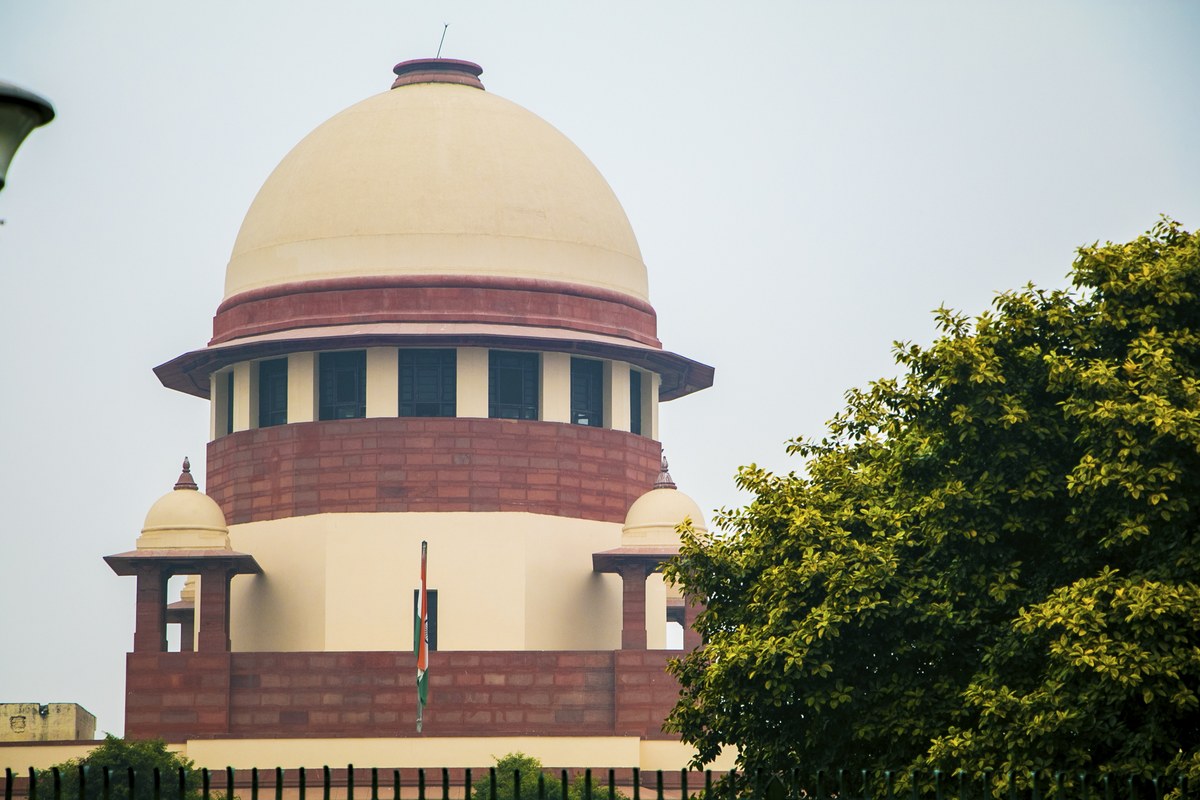
Physical intimacy in a consensual relationship cannot later be branded as rape just because the relationship turned sour, the Supreme Court held on Friday (30 October), discharging a Kerala man of rape, cheating and bigamy charges.
A bench of Justices B.V. Nagarathna and R. Mahadevan set aside the orders of the Kerala High Court, which had refused to discharge him.
The woman, who had been divorced earlier, alleged that the man hid the fact that he was already married with two children. She said the two married in Mysuru and lived together from 1996 to 2003, and that he got her consent by making her believe their marriage was valid.
The court noted that she came to know within six months that he was married and had children, yet lived with him for seven years. It said this undermined her claim that she believed she was his lawfully wedded wife, and held that the relationship was consensual.
“We wish to note a worrying trend in recent years wherein consensual relationships that have come to an end are retrospectively combed with a fine tooth so as to identify what can post-facto be construed as violence and sexual assault,” Justice Nagarathna said in the judgment.
The bench drew a line between consent that was never real because it was obtained by deception, and regret over past consent after a relationship ends. Treating the second as a crime, it said, “denudes the man of any agency entirely”, because he would be bound to a relationship for fear of being accused of rape later.
“This court has time and again witnessed the disturbing trend where failed relationships are being converted into criminal cases. Rape, being a heinous offence, must be reserved for situations where there is real sexual violence, coercion, or manipulation of consent,” the judgment said.
The court also said it was not its job to pass moral judgement on adults’ choices in their personal lives, and that criminal law cannot be used as “munitions to settle personal scores, exact revenge or coerce an individual to act in any particular way.”
At the same time, the bench noted that rape is among the most under-reported crimes. “For every case where the provisions related to rape are misused, there are several cases that never see the light of day. We must emphasise that genuine cases must be pursued with vigour where the facts clearly show sexual assault and violence. But equally, the justice system must not be turned into a tool of vengeance when relationships fail,” it said.
More to read





Behind the story
Read the sources and explore the context for yourself.
- The Hindu: Physical intimacy can’t be branded as rape if consensual relationship turns sour: Supreme Court (30 Oct 2026)thehindu.com
- LiveLaw: False rape accusation after breakup deprives man of agency, binds him to relationship indefinitely: Supreme Court (30 Oct 2026)livelaw.in
- LiveLaw: Court cannot pass moral judgments on adults’ choices: Supreme Court (30 Oct 2026)livelaw.in
- Law Trend: Failed relationship cannot turn past consensual intimacy into rape: Supreme Court discharges man (30 Oct 2026)lawtrend.in