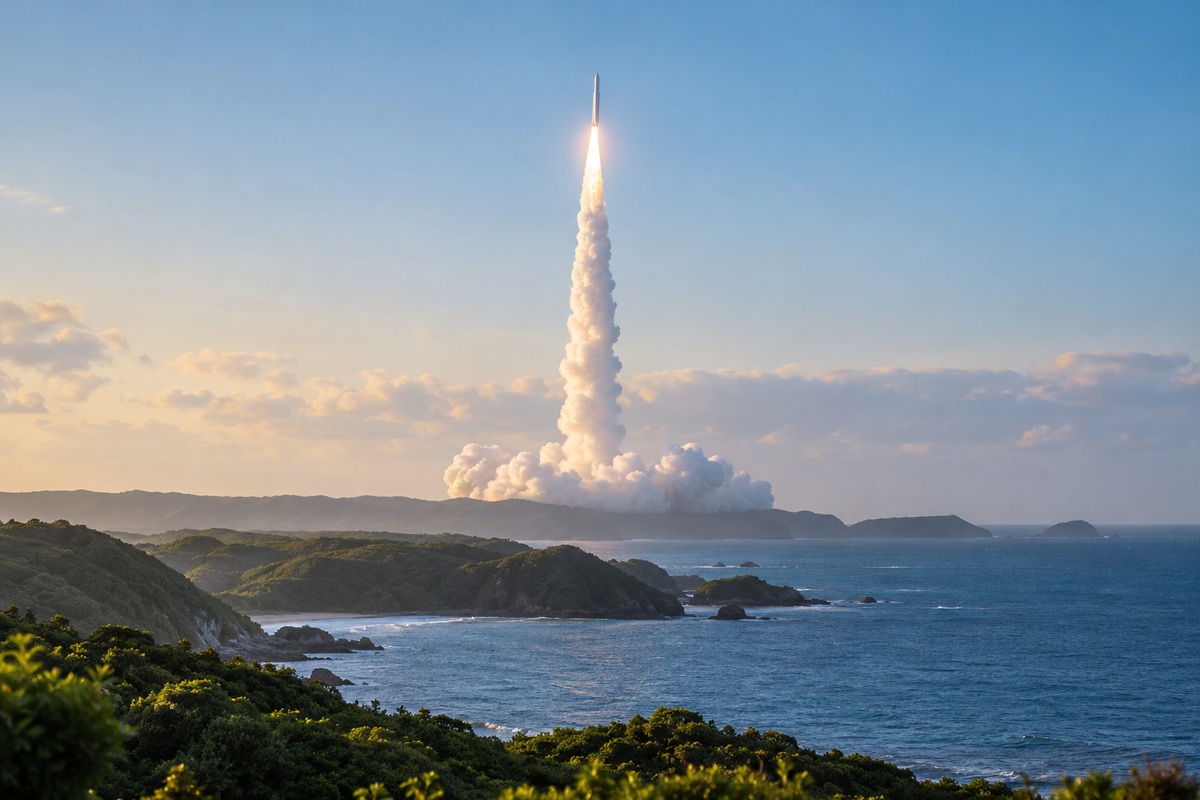
Japan has launched a spacecraft on a five-year journey with a small target: about 10 grams of material from Phobos, one of the two moons of Mars. The Martian Moons eXploration mission, or MMX, aims to bring the first samples from a Martian moon back to Earth.
JAXA confirmed that an H3 rocket carrying MMX lifted off from Tanegashima Space Center at 4:41:03 am Japan time on Tuesday, October 20. That was 1:11:03 am in India. The agency said the rocket flew as planned and the spacecraft separated normally about one hour and 11 minutes after launch.
The tiny sample target is meant to help tackle a much larger question: where did Mars’s moons come from? Scientists are testing two main explanations. Phobos and Deimos may be captured asteroids, or they may have formed from debris thrown into space by a giant collision involving Mars.
Phobos is an awkward destination, not a smaller version of our Moon. It is irregularly shaped, stretches roughly 27 kilometres at its widest and has gravity about one seventeen-hundredth of Earth’s. Analysing its material in laboratories could help distinguish between the competing accounts of its origin.
Under JAXA’s mission plan, MMX should reach the Martian system in 2027 and spend roughly three years studying the moons. Two soft landings on Phobos are planned to collect material. The spacecraft is also scheduled to observe Deimos before leaving the region in 2030.
The return capsule is targeted to reach Earth in 2031, with recovery planned in Australia. Those are future milestones, not achievements secured by Tuesday’s launch. For now, the confirmed success is departure and spacecraft separation; landing, collecting the sample and bringing it home remain the demanding steps ahead.
More to read





Behind the story
Read the sources and explore the context for yourself.