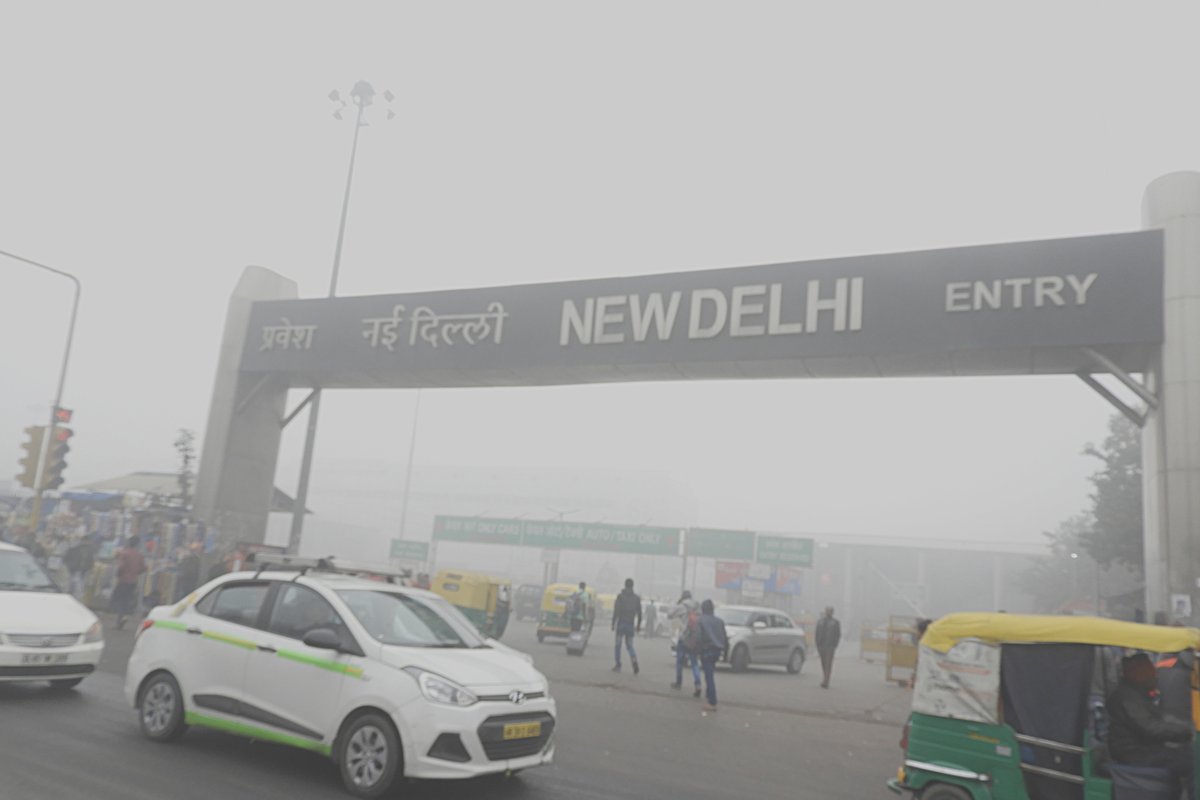
Delhi’s air quality slipped into the ‘very poor’ category on Monday (2 November) for the first time this season, putting the next stage of the city’s anti-pollution plan, GRAP Stage 2, in focus. The average AQI was 307 at 7.05 am and 310 at 8.05 am, according to the Central Pollution Control Board’s Sameer app, with Noida also in the ‘very poor’ range.
At 7.05 am, 37 of Delhi’s 58 active monitoring stations showed ‘very poor’ or worse air, and Jahangirpuri was the worst at 417. It was Delhi’s highest AQI since February, Scroll reported.
What is GRAP? The Graded Response Action Plan (GRAP) is a set of anti-pollution measures for Delhi and the National Capital Region, run by the Commission for Air Quality Management (CAQM). It has four stages tied to Delhi’s AQI: Stage 1 for ‘poor’ air (201-300), Stage 2 for ‘very poor’ (301-400), Stage 3 for ‘severe’ (401-450) and Stage 4 for ‘severe plus’ (above 450). Each stage adds to the curbs already in force.
Is Stage 2 in force now? Not yet, as of Monday afternoon. Stage 1 has been in force since 21 October. CAQM’s schedule allows a stage to be invoked in advance based on forecasts, or immediately if the AQI breaches the threshold. The Centre’s Air Quality Early Warning System had forecast on Sunday that air would stay ‘poor’ till Tuesday and turn ‘very poor’ on Wednesday.
What changes under GRAP Stage 2? Under the revised schedule dated 29 September 2026, Stage 2 mostly tightens enforcement. Roads must be mechanically swept and sprinkled daily, pollution hotspots get targeted action, and dust checks at construction sites are stepped up.
Parking fees are to be increased to discourage private vehicles. Resident welfare associations must give electric heaters to security, sanitation and other staff so they don’t burn waste or wood to keep warm. The Delhi government and NCR states are to stagger the timings of public offices and municipal bodies in Delhi, Gurugram, Faridabad, Ghaziabad and Gautam Buddh Nagar, and the Centre may do the same for its offices.
What is already in place? Several big curbs are already running. Since 1 November, vehicles registered outside Delhi that don’t meet BS-VI norms have been barred from entering the city until 31 January 2027, with electric and CNG vehicles exempt. CAQM has also told offices in Delhi and nearby cities, including Gurugram and Noida, to have 50% of staff work from home between 5 and 20 November. The Indian Idiot explained the 1 November rules here.
More to read

Behind the story
Read the sources and explore the context for yourself.
- Scroll: Delhi air quality worsens to ‘very poor’ category (2 Nov 2026)scroll.in
- The Indian Express: Delhi air quality plummets to ‘very poor’ category despite curbs, AQI crosses 300-mark (2 Nov 2026)indianexpress.com
- Hindustan Times: HT Morning Brief Nov 2: Delhi AQI crosses 300 mark (2 Nov 2026)hindustantimes.com
- Commission for Air Quality Management: Graded Response Action Plan (GRAP) for NCR, revision 29.09.2026caqm.nic.in
- The Indian Idiot: Delhi pollution rules from November 1 explained (1 Nov 2026)theindianidiot.com