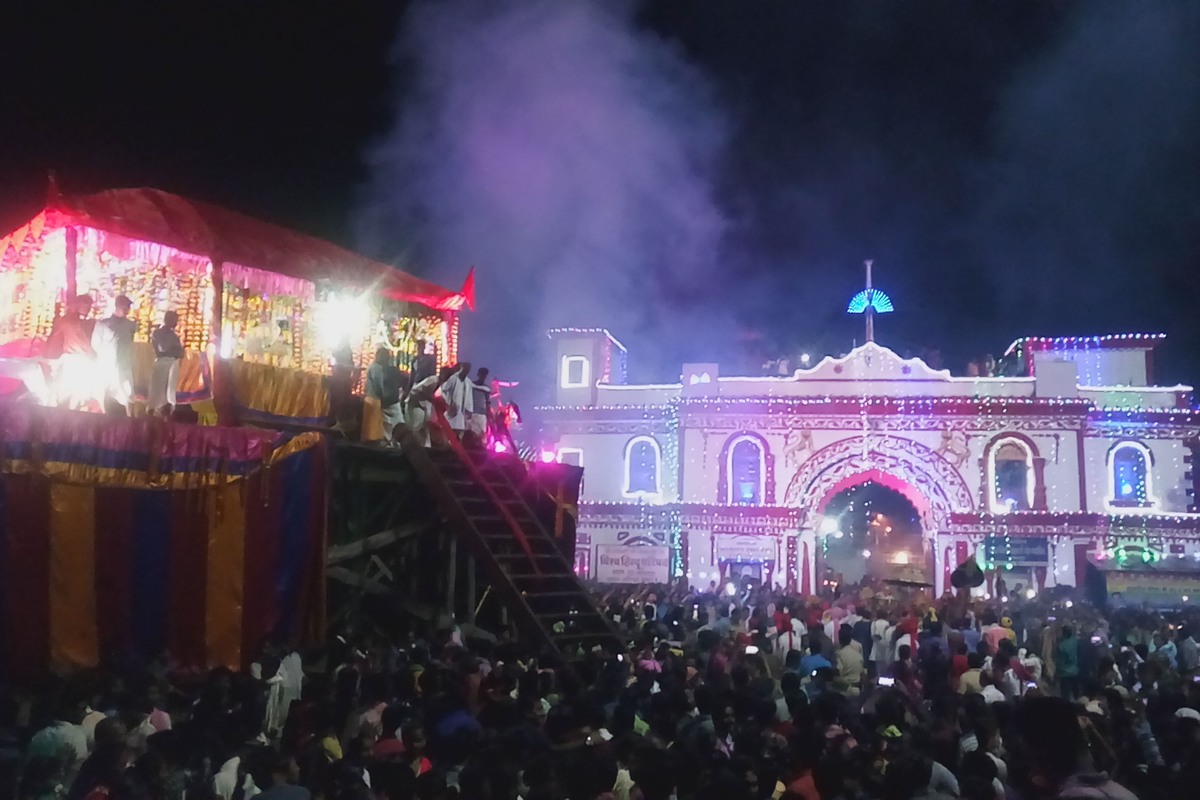
In Jagdalpur, one of Dussehra’s key rituals involves taking a sacred chariot away from the palace and bringing it back after a ceremonial exchange. It belongs to a celebration built around Danteshwari and local deities, rather than the killing of Ravana.
Bastar’s festival in Chhattisgarh is commonly described as lasting about 75 days. The district administration explicitly notes that Ravana’s effigy is not burnt. That long span covers a sequence of preparations and rituals, not 75 repetitions of the same main-day celebration.
The cycle opens with Pat Jatra on Hariyali Amavasya, the new moon in the month of Shravan. Wood is brought from the forest and worshipped for the chariot’s construction. The building of the vehicle is itself part of the festival, not simply backstage preparation.
Different villages have particular jobs. Sahapedia’s account describes carpenters and blacksmiths making the chariot, other communities preparing its rope, and designated groups pulling it. Its description identifies sal wood for the body and tinsa for the wheels: a large ritual object assembled through many communities’ work.
The chariot’s journey also carries a story. In the Bhitar Raini tradition described by Sahapedia, it is taken to Kumhdakot; the following day, a ceremonial negotiation and an offering of the new rice crop precede its return. Accounts explain the custom differently, so its origin should be understood as oral tradition rather than a single proven historical event.
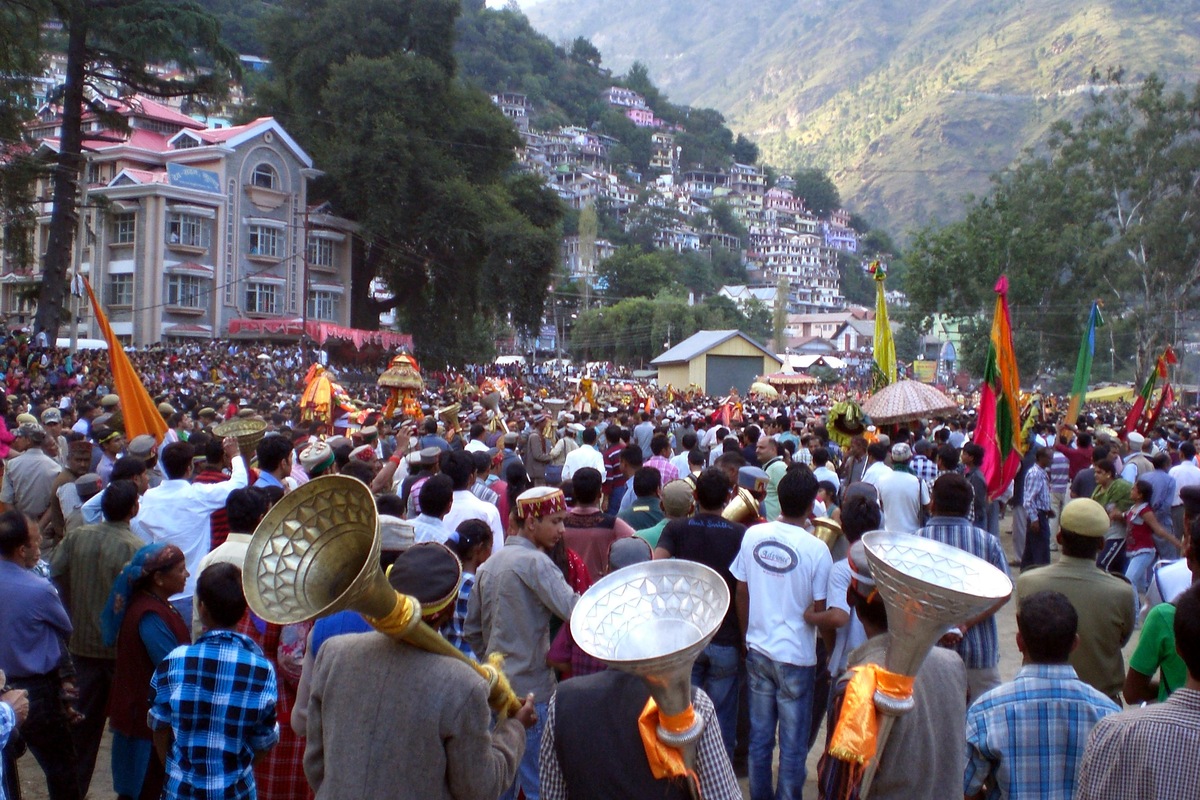
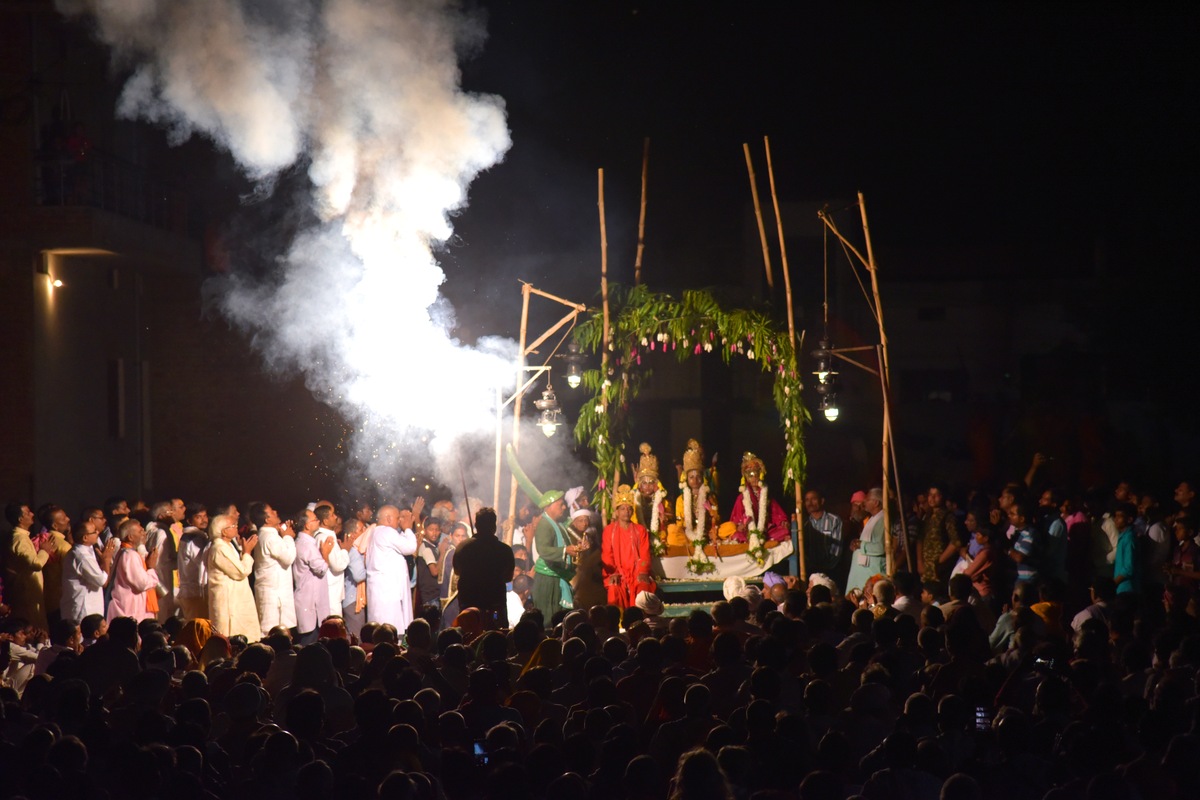
Sacred symbols, palanquins and ceremonial umbrellas representing village deities converge on Jagdalpur. The festival therefore gathers religious traditions from across Bastar, rather than centring only on one city’s procession. Local artisans, musicians and participating communities all have roles in this wider gathering.
There is a civic element too. Towards the end comes Muria Darbar, traditionally a forum for community representatives to raise public problems before the ruler. The district administration includes that audience among the festival’s concluding rituals.
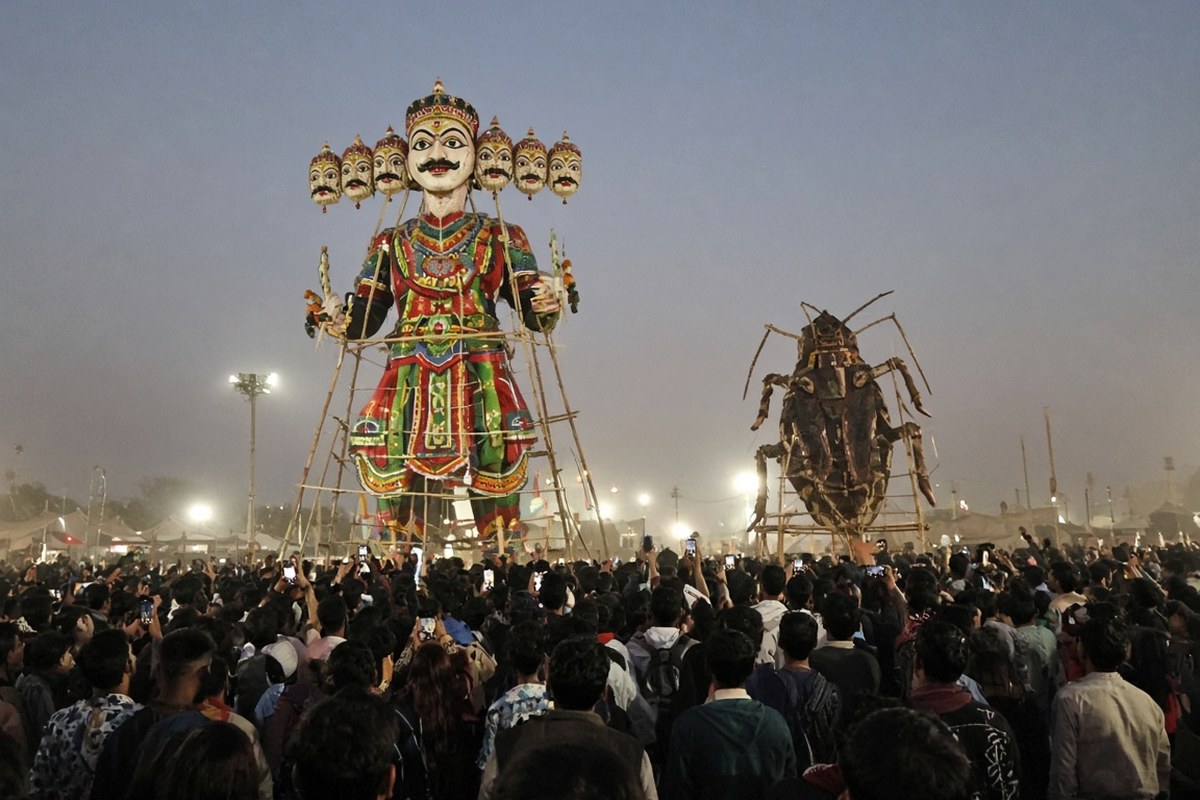
Dussehra falls on October 20 in the 2026 government holiday calendar. Bastar’s longer cycle follows its own sequence of rituals: here, the central story is a gathering of deities and communities, not an effigy burning.
More to read


Behind the story
Read the sources and explore the context for yourself.
- Bastar district administration: Culture & Heritagebastar.gov.in
- Swarnima Kriti: Bastaria Dussehra, A Coming Together of Deitiessahapedia.org
- Incredible India: Bastar Dussehraincredibleindia.gov.in
- Kurukshetra district: Dussehra (Vijayadashami), 20 October 2026kurukshetra.gov.in